The Complete Guide to Ranking a Website in a Competitive Niche

Ranking a website in a competitive niche in 2026 requires more than just high-quality content or a collection of backlinks. As search engines transition from simple keyword matching to sophisticated entity-based understanding and generative AI integration, the bar for entry has shifted. Success now demands a rigorous, data-driven framework that balances technical precision with deep topical authority.
This guide outlines the exact methodology used by top-tier agencies to dominate high-value SERPs. Whether you are entering a saturated market like fintech, legal services, or SaaS, or trying to reclaim lost ground after an algorithm update, the principles of competitive SEO remain consistent: eliminate technical friction, map the knowledge graph of your niche, and execute at a scale your competitors cannot match.
To succeed, you must move beyond the "publish and pray" model. By leveraging advanced competitor SEO analysis and real-time data, you can identify the specific content gaps and technical weaknesses in the current market leaders. The following framework provides a 12-month roadmap to turn a new or underperforming site into a dominant industry authority.
Key takeaways
- Topical authority is no longer optional; search engines prioritize sites that demonstrate depth across an entire subject matter, not just individual pages.
- Technical foundations, particularly Core Web Vitals and structured data, serve as the "entry fee" for competitive rankings.
- Content gap analysis is the most efficient way to prioritize your production calendar by identifying what the market leaders are missing.
- Entity building and digital PR have replaced traditional link building as the primary drivers of off-page trust.
- A 12-month execution cadence is necessary to see sustainable results in high-difficulty niches.
1. Niche and SERP Difficulty Assessment
Before writing a single word, you must understand the environment you are entering. Competitive niches are defined by high "Search Intent Complexity." In these spaces, a single keyword might trigger a mix of informational, commercial, and navigational results, along with AI Overviews and rich snippets. Understanding how to rank a website starts with a forensic audit of the current winners.
Analyzing the Top 10 Competitors
Look beyond the domain rating (DR) or domain authority (DA). In 2026, these metrics are directional but often misleading. Instead, analyze the "Content Velocity" of your competitors. How many pages are they publishing per month? What is the ratio of their informational content to their commercial landing pages? If the top three results are all legacy brands with twenty years of history, your strategy must focus on finding "flank" keywords—long-tail queries where their generalist approach fails to provide specific depth.
Identifying SERP Features
Different niches demand different formats. A competitive niche in the travel space will be dominated by map packs and images, while a legal niche will be dominated by "People Also Ask" blocks and high-authority institutional links. Use a rank tracker to monitor which SERP features appear for your target keywords. If 40% of the above-the-fold space is occupied by AI Overviews, your content must be structured to be cited by those models.
2. The Architecture of Topical Authority
Google’s move toward "Helpful Content" and E-E-A-T (Experience, Expertise, Authoritativeness, and Trustworthiness) means that single-page SEO is dead. To rank for a competitive term, you must prove you are an expert on the entire topic. This is achieved through topical mapping.
Building the Pillar-Cluster Model
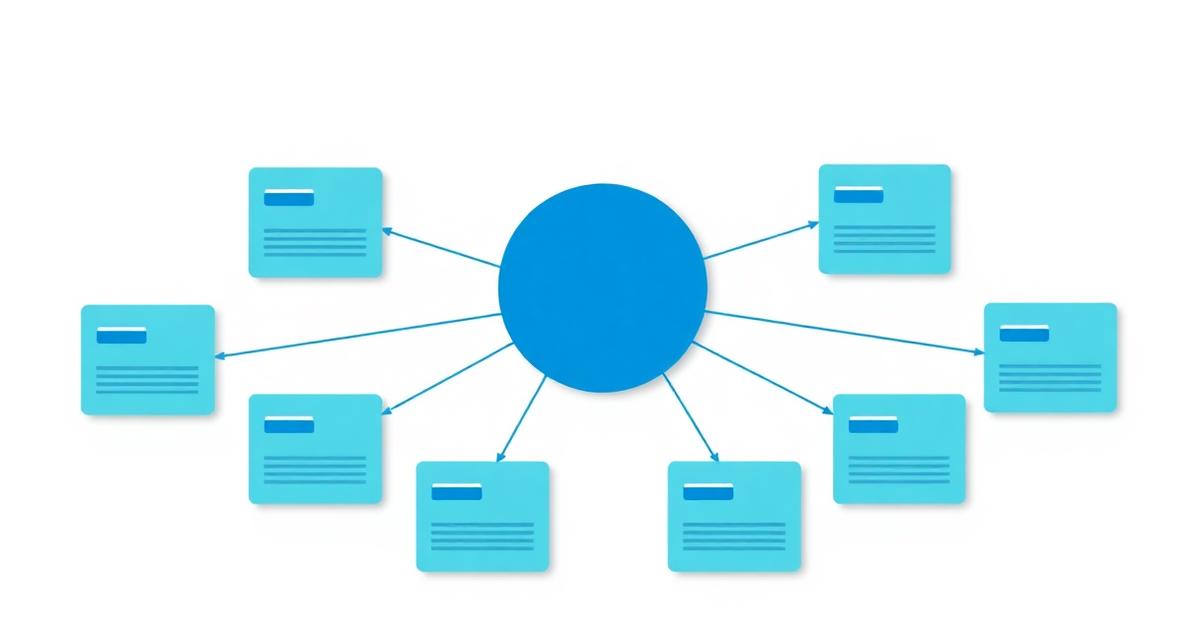
Start with a broad "Pillar Page" (like this one) that provides a comprehensive overview of a high-volume topic. Surrounding this pillar are dozens of "Cluster Pages" that dive deep into specific sub-topics. For example, if your pillar is "Small Business SEO," your clusters might include technical audits, local citations, and e-commerce schema. Each cluster page must link back to the pillar, creating a hub-and-spoke model that signals to search engines that your site is a definitive resource.
Content Gap Analysis
Competitor analysis shouldn't just look at what others are doing right; it should look at what they are missing. Use a keyword research tool to find "uncovered" queries—questions that users are asking but that no competitor has addressed with a dedicated, high-quality page. These gaps represent your fastest path to initial traffic and authority building.
3. Technical Foundations: The Entry Fee
In a competitive niche, you cannot afford technical errors. While technical SEO alone won't get you to position one, technical failures will certainly keep you off page one. As you develop your SEO strategy, prioritize the following pillars of site health.
Core Web Vitals and Page Experience
Site speed is a tie-breaker. In a niche where every competitor has good content, the site that loads 500ms faster often wins. Focus on Largest Contentful Paint (LCP) and Cumulative Layout Shift (CLS). Ensure your mobile experience is flawless, as Google uses mobile-first indexing exclusively in 2026.
Advanced Schema Markup
Structured data helps search engines understand the "entities" on your page. Beyond standard Article or Product schema, use FAQPage, BreadcrumbList, and Organization schema to maximize your real estate on the SERP. In 2026, specialized schema like Review and HowTo are critical for appearing in AI-driven search results.
4. Execution Phases and Prioritization
Ranking in a competitive niche is a marathon. You cannot fix everything at once. Use the following table to understand the typical phases of a successful SEO campaign.
| Phase | Focus Area | Primary Activities | Expected Outcome |
|---|---|---|---|
| Phase 1: Foundation (Months 1-2) | Technical & Audit | Technical SEO audit, site speed, schema, indexation cleanup. | Baseline health; removal of ranking inhibitors. |
| Phase 2: Authority (Months 3-5) | Content Infrastructure | Topical mapping, pillar page creation, internal link audits. | Initial rankings for long-tail "cluster" keywords. |
| Phase 3: Expansion (Months 6-9) | Content Velocity | High-volume content production, digital PR, backlink acquisition. | Movement for high-volume head terms; traffic growth. |
| Phase 4: Optimization (Months 10-12) | Conversion & Depth | UX optimization, refreshing old content, advanced entity building. | Position 1-3 dominance; high conversion rates. |
5. Content Production for the Modern SERP
The definition of "high-quality content" has changed. In 2026, it is no longer about word count; it is about "information density" and "unique value." If your article is just a rehashed version of the top five results, you will not rank. You must provide something the others don't: original data, expert interviews, or a unique tool.
Writing for AI and Humans
With the rise of AI search optimization, your content must be easily digestible by large language models. This means using clear headings, bulleted lists, and concise summaries. However, you must also satisfy the human reader with deep insight and "experience." Google’s algorithms are increasingly sophisticated at detecting generic, AI-generated filler. Always include "Information Gain"—the addition of new facts or perspectives not found elsewhere in the index.
The Role of Semantic Keywords
Avoid keyword stuffing. Instead, focus on semantic richness. If you are writing about "how to rank a website," your content should naturally include related entities like "crawling budget," "canonical tags," "backlink profile," and "user intent." Search engines use these related terms to verify the depth of your expertise.
6. Internal Linking Architecture
Internal links are the most undervalued lever in SEO. They distribute "link equity" (authority) from your high-performing pages to your new content. In a competitive niche, a flat site architecture is often a mistake. Instead, use a hierarchical structure where internal links follow the path of your topical clusters.
"Internal linking is the map that tells Google which pages are most important. If you have a 'money page' you want to rank, it should be the most internally linked page on your site, supported by dozens of contextually relevant blog posts."
When choosing anchor text, be descriptive. Instead of "click here," use "advanced competitor SEO analysis." This provides further context to the search engine about the destination page’s content. If you are struggling to see results, revisit your internal links; you may be "orphaning" important pages by not providing them with enough internal authority.
7. Digital PR and Off-Page Entity Building
In 2026, "link building" is a misnomer. The focus has shifted to Digital PR and Brand Mentions. Google looks for "signals of trust" from other authoritative entities. A link from a major news outlet or a recognized industry publication is worth more than a thousand low-quality guest posts.
Building Relationships, Not Links
Focus on creating "linkable assets"—original research, proprietary tools, or controversial opinion pieces that industry leaders will want to cite. This organic acquisition of links is the only sustainable way to compete in high-difficulty niches. If you don't have the time to manage this, you might consider hiring a specialized SEO agency to handle your outreach and PR strategy.
Social Proof and Brand Signals
Your off-page presence should extend beyond links. Mentions on social media, participation in industry podcasts, and positive reviews on third-party sites all contribute to your brand’s "entity" strength. Google looks at the "web of information" surrounding your brand to determine your level of authority.
8. Measuring Success and Adjusting Strategy
SEO is not a "set it and forget it" discipline. You must constantly monitor your performance and be ready to pivot when rankings fluctuate. A sudden drop in rankings is often a signal of a new competitor entering the space or a shift in how Google interprets intent for a specific query.
Key Performance Indicators (KPIs)
Don't just track rankings. Monitor your "Share of Voice"—the percentage of total available clicks you are capturing for your target keyword set. Track "Ranking Distribution" to see how many of your keywords are moving from page three to page one. If you notice a decline, consult our guide on why Google rankings drop to diagnose the issue quickly.
Prioritization Scoring
When you have a list of a hundred potential SEO tasks, how do you choose what to do first? Use a prioritization matrix to score tasks based on their potential impact versus the effort required.
| Task Category | Impact (1-10) | Effort (1-10) | Priority Score |
|---|---|---|---|
| Fixing Crawl Errors | 9 | 3 | 27 (High) |
| Content Refresh for Page 1 Keywords | 8 | 4 | 32 (High) |
| New Pillar Page Production | 9 | 8 | 1.1 (Medium) |
| Acquiring Premium Digital PR Links | 10 | 9 | 1.1 (Medium) |
| Changing Button Colors (UX) | 2 | 1 | 2 (Low) |
9. The 12-Month Operating Cadence
Consistency beats intensity. Ranking in a competitive niche requires a relentless focus on incremental improvements. A typical monthly cadence for a high-performing SEO team includes:
- Week 1: Performance Review & Technical Health. Check GSC for new errors and review the previous month's traffic and conversions.
- Week 2: Content Optimization. Identify pages that have slipped in rankings and refresh them with new data or better formatting.
- Week 3: New Content Production. Publish new cluster pages based on your topical map.
- Week 4: Promotion & Link Building. Focus on outreach, social sharing, and securing guest spots or PR mentions.
This cycle ensures that your site stays fresh and that you are constantly building new authority while protecting your existing rankings. For more details on what this costs, see our analysis of SEO agency pricing.
10. Understanding AI and Generative Search
By 2026, the SERP is no longer just a list of blue links. Google's Search Generative Experience (SGE) and other AI tools like Perplexity are changing how users find information. To rank, your content must be "linkable" by these AIs.
Structuring for AI Summarization
AIs prefer structured, factual data. Use tables, lists, and clear "Key Takeaway" sections to make it easier for these models to scrape your site for answers. The goal is to be the "source of truth" that the AI cites when answering a user's question. This requires a shift from writing for keywords to writing for "intent fulfillment."
The Survival of the Specialist
As AI makes generic content cheap and abundant, the value of specialist knowledge increases. In a competitive niche, do not try to be everything to everyone. Focus on a specific sub-niche where your expertise is undeniable. This "narrow and deep" approach is often more effective than a "broad and shallow" one.
11. Common Mistakes to Avoid
Even with a great strategy, certain mistakes can derail your progress. One of the most common is failing to account for "keyword cannibalization," where multiple pages on your site compete for the same keyword, confusing search engines and splitting your authority. Another is ignoring the "Long Tail" of search. While the head terms have the most volume, the long-tail keywords often have much higher conversion rates and lower competition.
Furthermore, avoid over-optimizing your site for a single algorithm. Google updates its systems hundreds of times a year. A strategy built on "tricking" the algorithm will eventually fail. A strategy built on providing the best possible user experience and the most authoritative information will remain resilient. If you are unsure about your current direction, learning rank tracking explained can help you understand the nuances of SERP volatility.
12. Conclusion: The Path to Dominance
Ranking a website in a competitive niche is not a mystery; it is a process of systematic elimination. You eliminate technical barriers, you eliminate content gaps, and you eliminate the lack of trust through authoritative backlinks. It requires patience—often taking 6 to 12 months to see significant results—and a willingness to invest in quality over quantity.
By following the framework outlined in this guide—from topical mapping to digital PR—you can build a sustainable competitive advantage. The digital landscape will continue to evolve, but the core principles of relevance, authority, and user experience will always be the foundation of search success. Start by auditing your current standing and identifying the most impactful changes you can make today.
7. Advanced Entity Building and Digital PR
Modern SEO has shifted from keyword strings to entities—unique, well-defined objects or concepts that search engines can identify regardless of language or phrasing. In a competitive niche, you must establish your brand as a recognized entity within the Knowledge Graph. This is achieved through a combination of semantic clarity and high-authority validation.
Establishing Entity Relationships
To rank for high-difficulty terms, your website must be inextricably linked to the topic in the eyes of search engines. Use advanced schema markup to define these relationships. For example, using the sameAs attribute in your Organization schema to link to your Wikipedia page, LinkedIn company profile, or industry awards helps verify your identity. Furthermore, ensure your authors have robust "Author Entities" by linking their bios to their previous publications and social credentials, reinforcing the E-E-A-T signals required for competitive SERPs.
Digital PR vs. Traditional Link Building
Low-tier guest posting is ineffective in saturated markets. Success now requires Digital PR—the process of gaining mentions and links from top-tier journalistic outlets and industry-leading publications. These links act as "trust signals" that are far more powerful than standard niche edits. Focus on creating "linkable assets," such as original industry reports or proprietary data studies, that journalists can cite as a primary source. This not only builds a diverse backlink profile but also positions your brand as a thought leader.
8. Measurement, Iteration, and the 12-Month Cadence
Ranking a website in a competitive environment is not a one-time setup; it is a process of continuous refinement. You must move beyond tracking mere "blue link" rankings and start measuring Share of Voice (SoV) across various SERP features, including AI Overviews, video carousels, and local packs.
Prioritization Scoring Framework
In a competitive niche, you will always have more tasks than resources. Use a P.I.E. (Potential, Importance, Ease) or similar scoring model to prioritize your SEO roadmap. This ensures that high-impact technical fixes and "low-hanging fruit" content optimizations are addressed before experimental tactics.
| Action Item | Potential (1-10) | Importance (1-10) | Ease (1-10) | Priority Score |
|---|---|---|---|---|
| Fix Core Web Vital Failures | 9 | 10 | 6 | 25 |
| Topical Map Expansion (New Clusters) | 10 | 9 | 4 | 23 |
| Internal Link Optimization (Money Pages) | 7 | 8 | 9 | 24 |
| Digital PR / Data Study Campaign | 9 | 7 | 3 | 19 |
The 12-Month Operating Cadence
To maintain momentum and outpace competitors, follow a rigorous monthly execution schedule. This prevents "strategy drift" and ensures all pillars of SEO are being addressed simultaneously.
- Monthly Technical Health Check: Use a technical SEO audit tool to identify new crawl errors, 404s, or schema breakages.
- Quarterly Content Gap Refresh: Re-analyze the top 5 competitors every 90 days to see if they have covered new topics that you need to address.
- Bi-Weekly Link Building Outreach: Consistent outreach ensures a steady flow of new referring domains, preventing the "link plateaus" common in high-difficulty niches.
- Continuous Conversion Rate Optimization (CRO): As traffic grows, use A/B testing to ensure your SEO traffic is actually converting into revenue.
Monitoring AI Overviews and Search Generative Experience
As search engines evolve, your measurement strategy must include tracking how often your content is cited in AI-generated responses. If your share of voice in AI Overviews is declining, it typically indicates that your "Information Gain" is low or your content structure is too opaque for LLMs to parse. Regularly audit your content optimization strategies to ensure you are providing the direct, structured answers that modern search engines prioritize.
Frequently asked questions
How long does it take to rank in a competitive niche?
In highly competitive industries, it typically takes 6 to 12 months to see significant movement for high-volume head terms. However, you can often begin ranking for long-tail, specific queries within 3 months by focusing on content gaps. For a more detailed breakdown by industry, refer to our guide on how long SEO takes to work.
Should I focus on backlinks or content first?
Content is the foundation. Without high-quality, relevant content, backlinks have nothing to "support." However, in a competitive niche, you cannot rank with content alone. The ideal approach is a parallel strategy: build a strong content foundation while simultaneously executing a digital PR campaign to earn authority-building links.
How do I know if my niche is too competitive?
No niche is "too competitive" if you have a unique angle or more resources than the current players. A niche is difficult if the top 5 results are occupied by massive brands (like Amazon, Forbes, or government sites) with millions of backlinks. In these cases, your strategy should be to target "unserved" sub-niches where these giants are not providing enough detail.
What is the most important technical SEO factor in 2026?
Mobile page experience and structured data (schema) are the most critical. As search engines rely more on AI to parse information, using schema to define your entities (who you are, what you do, and what you know) is essential for appearing in AI-driven summaries and rich snippets.
Do I need an agency to rank in a competitive niche?
It depends on your internal resources. Competitive SEO requires specialized skills in technical auditing, data-driven content strategy, and high-level PR. If you lack these in-house, hiring one of the best SEO agencies for 2026 can provide the expertise and scale needed to compete. If you decide to hire, make sure you know the questions to ask an agency before signing a contract.