How Long Does SEO Take to Work? Realistic Timelines by Industry
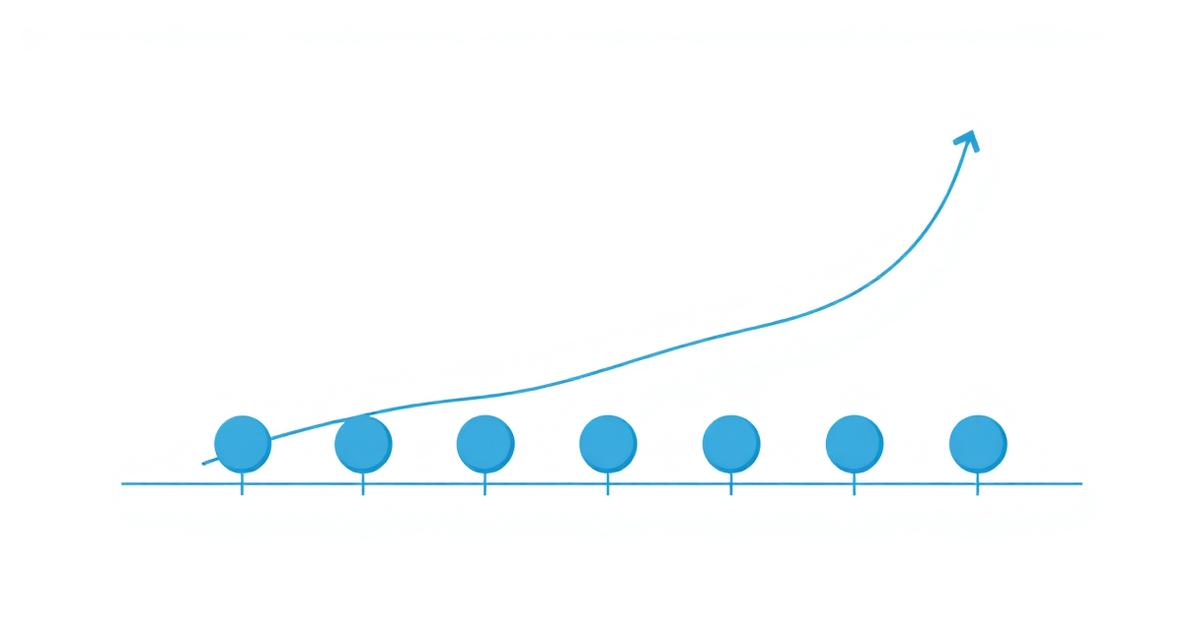
In the digital marketing landscape of 2026, the question "how long does SEO take to work?" remains the most common inquiry directed at agencies and internal teams. The standard answer—four to twelve months—is often dismissed as a generic hedge, yet it remains fundamentally rooted in the mechanics of how search engines discover, crawl, index, and eventually trust content. In an era where AI-generated content can saturate the web in seconds, search engines have become more cautious, prioritizing historical stability and verified expertise over immediate signals.
The reality is that SEO is not a single lever but a combination of technical integrity, content relevance, and domain authority. A brand-new domain starting from scratch faces a fundamentally different timeline than an established enterprise site with significant "domain age" and a robust backlink profile. Understanding the nuances of these timelines is essential for setting realistic expectations, securing budget approvals, and avoiding the trap of abandoning a strategy just as it begins to gain traction.
For businesses looking to transition from guesswork to data-driven expectations, this guide breaks down the variables that dictate your specific timeframe. By analyzing the intersection of technical debt, competitive density, and content velocity, we can move past generalizations and into industry-specific projections that help you plan for long-term growth.
- Baseline: Expect 3-6 months for initial signals and 12+ months for significant ROI.
- Variables: Domain history, existing technical debt, and niche competition are the primary determinants of speed.
- Leading Indicators: Impressions and non-branded keyword rankings move long before conversions and revenue.
- Industry Variance: Local services may see results in 90 days, while B2B SaaS or YMYL (Your Money Your Life) niches often require 9-18 months.
- 2026 Shift: Search engines now prioritize "entity authority" and user experience signals, which take time to accumulate through consistent publishing.
The Core Variables Determining Your SEO Timeline
There is no "fixed" duration for SEO success because every website starts from a different baseline. When a strategist evaluates a project, they aren't just looking at keywords; they are assessing the "friction" that exists between the site and the search engine's index. Several critical variables determine whether you will see results in weeks or years.
Domain History and Authority
Search engines use historical data to determine trust. A domain that has been active for a decade, with a clean record and a relevant backlink profile, will rank new content much faster than a brand-new .com. This is often referred to as "domain authority" or "site strength." If you are starting on a fresh domain, you are essentially in a "sandbox" period where Google is testing the legitimacy of your site before committing it to high-visibility positions. In contrast, an established site may only need to fix technical errors or refresh content to see a jump in rankings within 30 to 60 days.
Technical Debt and Infrastructure
Technical SEO is the foundation. If your site has a convoluted URL structure, slow server response times, or poor mobile usability, search engines will struggle to crawl and index your pages efficiently. Fixing these issues provides a "lifting of the veil." Often, sites with significant technical debt see a rapid surge in impressions immediately after a technical audit and remediation, simply because the search engine can finally "see" the content properly. If you're unsure where to start, looking at why your rankings dropped in the past can often reveal underlying technical issues.
Competitive Density
SEO does not happen in a vacuum. You are competing against every other site in your niche for a limited number of slots on page one. If you are a local plumber in a small town, you might rank in 60 days. If you are a national credit card comparison site, you are competing against multi-billion dollar entities with massive SEO budgets. The more competitive the niche, the longer the "moat" takes to build. Understanding competitor SEO analysis is vital for setting a realistic timeline based on the "gap" between you and the current leaders.
Content Velocity and Quality
In 2026, search engines are more sophisticated at detecting "thin" or purely AI-generated filler. To rank, you must demonstrate E-E-A-T (Experience, Expertise, Authoritativeness, and Trustworthiness). Content velocity—the speed at which you publish high-quality, relevant content—acts as an accelerator. A site publishing one high-quality piece per week will take significantly longer to build topical authority than a site publishing five pieces per week, provided the quality remains consistent.
Month-by-Month: The SEO Lifecycle
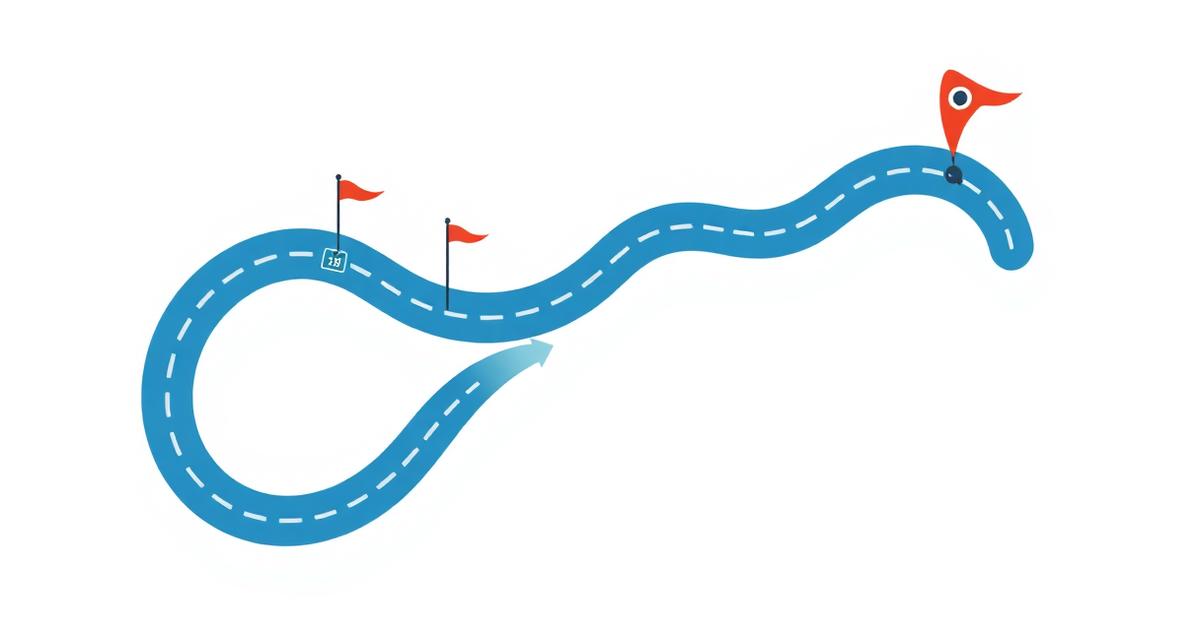
To manage stakeholder expectations, it is helpful to view the first year of an SEO campaign as a series of phases. While these phases overlap, they provide a framework for what to look for beyond just "revenue."
| Phase | Primary Activities | Expected Indicators |
|---|---|---|
| Month 1: Audit & Strategy | Technical audit, keyword research, competitor analysis, site mapping. | Identification of "low hanging fruit," technical error reports. |
| Month 2: Technical Fixes | Crawlability improvements, site speed, schema markup, URL restructuring. | Increased crawl rate in GSC, faster indexing of new pages. |
| Months 3-4: Content & Basics | New content publishing, optimizing existing pages, internal linking. | Growth in total impressions, ranking for long-tail keywords. |
| Months 5-6: Authority Building | Backlink acquisition, PR outreach, guest posting, brand mentions. | Movement from page 4-5 to page 2, improved non-branded traffic. |
| Months 7-12: The Tipping Point | Conversion rate optimization (CRO), content updates, scaling high-performers. | Page 1 rankings for target keywords, measurable ROI and lead flow. |
The "Valley of Disappointment"
The most critical period in any SEO campaign is months three and four. This is the period where the initial technical work has been completed and content is being produced, but the results haven't yet manifested in the form of organic conversions. Many businesses make the mistake of cutting budget here. In reality, this is when the search engine is "digesting" the changes. During this time, you should focus on leading indicators—which we will discuss in depth below—to ensure you are on the right track.
Leading vs. Lagging Indicators: Measuring Early Success
If you only measure SEO success by revenue or page one rankings, you will likely conclude that SEO isn't working for the first six months. Instead, sophisticated marketers track leading indicators. These are metrics that trend upward before the actual "money" keywords start to move. Using a tool to track keyword rankings across all positions (not just the top 10) allows you to see the site gaining momentum in the "long tail."
"SEO is like an interest-bearing account. The initial deposits seem insignificant, but the compounding effect of technical health and content authority eventually creates a growth curve that no other channel can match at scale."
Top 3 Leading Indicators
- Search Impressions: Before people click, they see your result. A steady rise in Google Search Console (GSC) impressions means your content is becoming relevant for more queries.
- Average Position of Long-Tail Keywords: Ranking #40 for a niche query is better than ranking nowhere. If your average position for 100 new keywords moves from 80 to 30, you are winning, even if your traffic hasn't spiked yet.
- Crawl Frequency: As Google builds trust in your site, its bots will visit more frequently. If your "pages crawled per day" metric increases, it’s a sign that the search engine is prioritizing your domain.
Realistic Timelines by Industry
Industry-specific nuances are perhaps the biggest factor in how long SEO takes to work. Factors like transaction value, regulatory requirements, and the sheer volume of existing content in the niche dictate the pace of growth.
Local Services (HVAC, Legal, Real Estate)
Local SEO often yields the fastest results. Because you are only competing with businesses in a specific geographic radius, the pool of competitors is smaller. A well-optimized Google Business Profile combined with localized landing pages can show results in as little as 90 days. However, for highly competitive local niches like personal injury law, the timeframe expands significantly. When deciding on your approach, consider whether a local SEO agency or a national firm is better suited for your specific geographic goals.
SaaS and B2B Technology
B2B SaaS is notoriously competitive. The sales cycle is long, and the keywords are often high-intent and expensive (CPC). SEO for SaaS usually requires a "bottom-up" approach—ranking for technical "how-to" queries and comparison keywords ("Competitor A vs Competitor B") before targeting high-level category terms. Expect a 6 to 12-month window before SEO becomes a primary lead driver.
E-commerce and Retail
E-commerce SEO depends heavily on product volume and technical infrastructure. For a site with thousands of SKUs, technical SEO (facets, filters, and canonicalization) can yield results in 3-4 months. For new brands trying to rank for generic category terms (e.g., "leather boots"), the timeline is often 12+ months due to the dominance of massive retailers like Amazon or Nordstrom. Success here requires a blend of deep keyword research and aggressive backlink building.
YMYL: Finance, Healthcare, and Legal
Google applies much higher standards to sites that impact a user's health or financial stability (Your Money Your Life). For these industries, the "trust" component of E-E-A-T is paramount. You cannot simply write your way to the top; you need verified authors, citations, and a clean reputation. SEO for YMYL sites is a marathon, often taking 12 to 18 months to see significant movement in highly sensitive categories.
The Impact of "Technical Debt" on Recovery Timelines
If you are inheriting a site with a history of manual penalties, poor-quality AI spam, or massive crawl errors, your timeline starts with a "recovery phase." This phase can take 3 to 6 months just to return the site to a neutral standing with Google. During this time, you aren't building new growth; you are digging out of a hole. Understanding what questions to ask an agency before hiring them can help you identify if they have the technical expertise to handle such a recovery.
Technical debt often manifests as:
- Large volumes of thin or duplicate content.
- Broken redirect chains that leak "link juice."
- Unoptimized images and scripts slowing down Core Web Vitals.
- Lack of structured data (Schema), making it hard for AI engines to parse your site.
Content Velocity: The Only Real "Shortcut"
While you cannot force Google to trust you faster, you can accelerate the process by increasing your content velocity. This doesn't mean publishing more junk; it means covering a "topic cluster" in its entirety as quickly as possible. When you publish 20 interconnected articles on a single specific niche topic within a month, you signal to search engines that you are an authority on that specific subject much faster than if you spread those articles over a year.
This strategy, often called "topical authority building," helps you bypass some of the traditional wait times by dominating the semantic landscape of a niche. For those operating in a competitive niche, content velocity is often the only way to break through the noise of established incumbents.
How AI and "AI Overviews" Change the Timeline
As of 2026, the traditional blue-link SERP is now heavily influenced by AI Overviews and chatbots like Perplexity and ChatGPT. These systems don't just look at backlinks; they look for "mentions" and "citations" across the web. This adds a new layer to the SEO timeline: the time it takes for LLMs (Large Language Models) to update their training data or include your site in their RAG (Retrieval-Augmented Generation) indexes. To stay ahead, businesses must focus on AI search optimization, which can sometimes provide faster visibility in "AI answers" than traditional organic rankings.
| Industry Niche | Competitive Level | Months to Initial Traffic | Months to Peak ROI |
|---|---|---|---|
| Local Service (Low Comp) | Low | 2 - 4 | 6 - 9 |
| B2B Manufacturing | Medium | 4 - 7 | 9 - 14 |
| SaaS / Fintech | High | 6 - 10 | 12 - 18 |
| Affiliate / Publishing | Very High | 8 - 12 | 18 - 24 |
| Medical / Health (YMYL) | Extreme | 9 - 15 | 18 - 36 |
Why SEO Timelines Are Getting Longer
It is a common observation among SEO professionals that results take longer today than they did five years ago. Several systemic factors contribute to this shift:
Indexation Throttling
Google and other search engines no longer index every page they find. With the explosion of AI-generated content, search engines are more selective. If your content doesn't immediately signal high value, it may sit in the "Discovered - currently not indexed" status for weeks. This delay in indexation naturally pushes back the entire SEO timeline.
The "Freshness" Filter
For many queries, search engines now prefer content that has shown sustained engagement over time. They may give a new page a temporary "test" boost, but sustained rankings only come after the page has demonstrated low bounce rates and high dwell time over a period of months.
Increasing Standards for Backlinks
In the past, a few high-quality backlinks could move the needle in weeks. Today, search engines look for a "natural" backlink profile. Sudden spikes in links can trigger filters, meaning the safest and most effective way to build authority is through a steady, long-term outreach strategy. This patient approach to SEO services is more expensive and takes longer, but it is the only way to ensure long-term stability.
Milestones to Watch in the First 180 Days
To keep a project on track, you should set quarterly milestones that focus on the health and direction of the site rather than just the final result.
Days 1-60: The Foundation
- 100% of critical technical errors resolved.
- Main "money pages" optimized for primary keywords.
Days 61-120: The Momentum
- Total keywords ranked (in the top 100) increases by 20-50%.
- First few non-branded clicks appear in GSC.
- Domain Rating (DR) or equivalent authority metric shows a slight uptick.
Days 121-180: The Presence
- Targeted long-tail keywords reach the first page.
- Organic traffic begins to show a consistent month-over-month growth trend.
- Assisted conversions (users who find the site via SEO but convert later) start appearing in analytics.
Is It Ever Possible to See "Instant" SEO Results?
While "instant" is a stretch, there are scenarios where significant gains occur within days. This usually happens when an established, high-authority site has a "blockage." For example, if a site accidentally had its entire blog set to noindex, fixing that one tag will result in a massive traffic surge as soon as the site is re-crawled. Similarly, if a high-authority site publishes a piece on a trending topic with zero competition, it can rank #1 in hours. However, for 99% of businesses, SEO remains a process of gradual accumulation.
For those who need faster results, combining SEO with a PPC (Pay-Per-Click) strategy is the recommended approach. This allows you to "buy" traffic and test keyword conversions immediately while you wait for the organic "flywheel" to start spinning. You can explore RankThrottle's features to see how we help bridge the gap between initial research and long-term ranking stability.
Conclusion: The Cost of Impatience
The biggest threat to a successful SEO campaign is not the competition or the algorithm; it is impatience. The "cost" of stopping an SEO campaign at month four is not just the money spent, but the loss of all the momentum that was about to break the surface in month six. By understanding that SEO is an investment in a digital asset rather than a monthly utility bill, you can approach the timeline with the perspective required to win in the long run.
Success requires a commitment to quality, a solid technical foundation, and the data tools to track the subtle "leading indicators" that prove the strategy is working. Whether you are a small business looking for vetted SEO agencies or a national brand scaling your content, the timeline remains the same: build trust first, and the rankings will follow.
Frequently asked questions
Is it possible to rank on page one in less than a month?
It is possible only under specific conditions: extremely low-competition keywords, highly specific long-tail queries, or news-related content on a high-authority domain. For any meaningful, high-volume commercial keyword, ranking on page one in less than a month is highly unlikely for a new or average-authority website.
Why do some agencies promise results in 30 days?
Agencies promising 30-day results are often referring to "leading indicators" (like being indexed) or are targeting extremely obscure, zero-volume keywords that no one is searching for. In some cases, they may be using high-risk "black hat" techniques that can lead to long-term penalties. Always vet providers by checking their pricing models and service inclusions.
How does content quality affect the SEO timeframe?
High-quality content that answers search intent effectively can rank faster because it earns better user engagement signals (higher click-through rates and longer dwell times). Search engines use these signals to validate their ranking decisions. Conversely, "thin" content will likely be ignored or suppressed, extending the timeline indefinitely.
If I stop doing SEO, will my rankings drop immediately?
Not immediately. Unlike PPC, where traffic stops the moment you stop paying, SEO has a "residual" effect. However, as competitors continue to optimize and search engines update their algorithms, your rankings will gradually decay. Maintenance is required to keep the positions you've spent months earning.
Does social media activity speed up SEO results?
Social media does not directly impact SEO rankings. However, social activity can drive traffic to your content, increasing the chances of earning natural backlinks and brand mentions. These indirect signals can help search engines discover and trust your content faster, potentially shortening the initial phases of the SEO timeline.