In-House SEO vs. Hiring an Agency: A Cost and ROI Breakdown
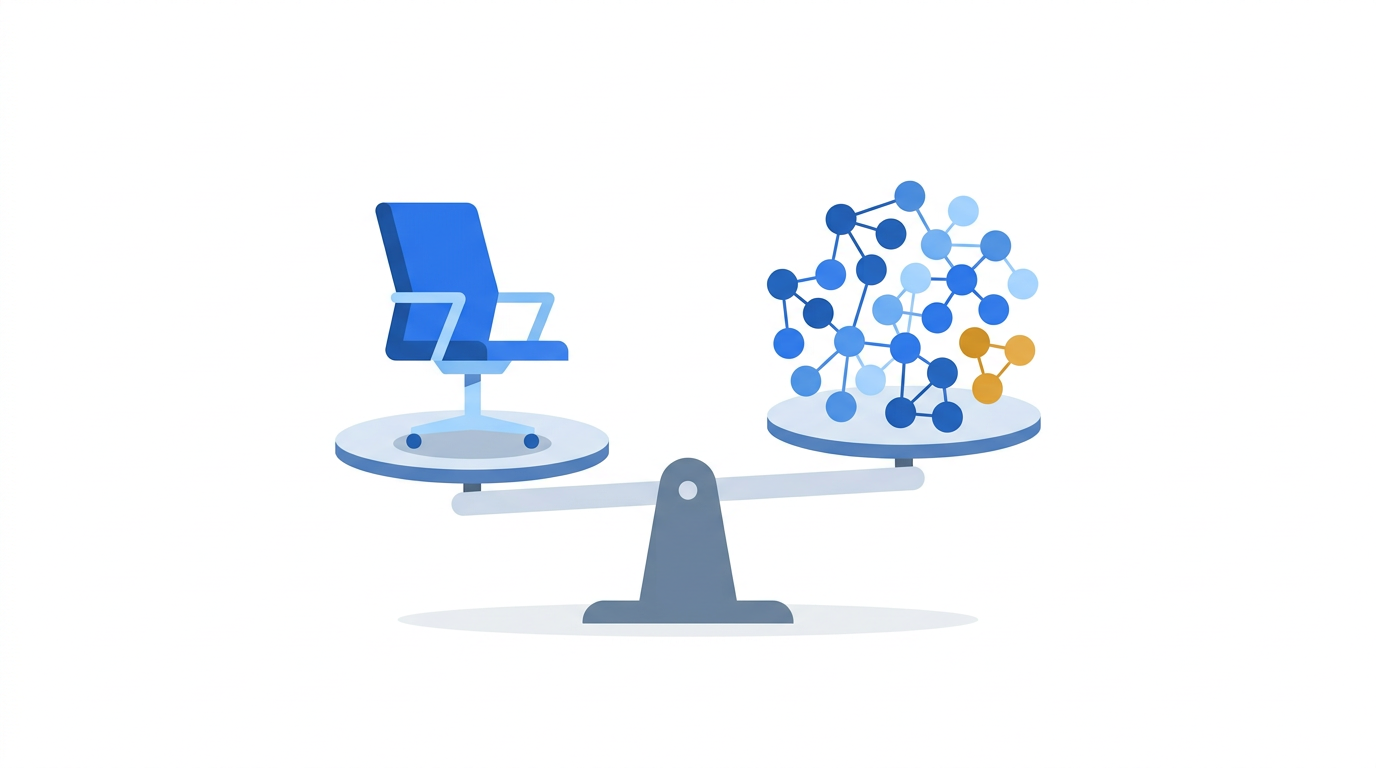
Deciding between building an internal SEO team or partnering with an external agency is one of the most consequential decisions a marketing leader will make in 2026. This choice determines not just your monthly burn rate, but your ability to adapt to rapid shifts in generative AI search, technical debt management, and content velocity. As search engines evolve from simple link-based indexing to complex AI-driven answer engines, the "correct" answer depends less on preference and more on your specific growth stage, technical infrastructure, and current market share.
The debate of in-house SEO vs. agency is often framed as a simple cost comparison, yet the hidden overhead of recruitment, management, and tooling often obscures the true financial reality. Conversely, agencies offer a scalable bench of talent but can suffer from a lack of deep institutional knowledge regarding your specific product nuances. To make an informed choice, you must quantify the "fully loaded" cost of an employee versus the comprehensive service level of a specialized firm.
This guide provides a rigorous framework for evaluating these two paths. We will break down the granular costs of hiring, the ROI potential of agency expertise, and the hybrid models that many high-growth companies use to bridge the gap. By the end of this analysis, you will have the mathematical models and qualitative checklists needed to determine which path maximizes your organic pipeline and search presence.
- Fully Loaded Costs: An in-house SEO specialist costs 1.3x to 1.5x their base salary when accounting for benefits, taxes, and tools.
- Expertise Breadth: Agencies provide access to specialized roles (Technical SEO, Content Strategists, Link Builders) that are difficult to find in a single generalist hire.
- Ramp Time: Agencies typically achieve full operational velocity within 30 days, whereas a new hire may take 90-120 days to fully integrate.
- Risk Management: In-house teams create a "single point of failure" risk, while agencies offer continuity despite individual staff turnover.
- Hybrid Success: Many organizations find the highest ROI by hiring an internal SEO manager to own strategy while using an agency for execution and scale.
The True Cost of In-House SEO: Beyond the Salary
When leadership considers hiring an SEO specialist, they often look exclusively at the base salary. In 2026, a mid-to-senior level SEO strategist in a major market commands a salary between $95,000 and $145,000. However, the base salary is only the starting point. To understand the cost of in-house SEO, one must calculate the fully loaded cost, which includes payroll taxes (FICA, FUTA, SUTA), health insurance premiums, 401(k) matching, and office overhead.
Furthermore, an SEO professional is ineffective without a robust stack of tools. A professional SEO suite—incorporating daily rank tracking, backlink analysis, technical crawling, and AI content optimization—can easily cost $1,000 to $2,000 per month. If you are hiring an employee, you are also responsible for their professional development and the "management tax"—the time your VP of Marketing or CMO spends interviewing, onboarding, and providing weekly direction. When these factors are aggregated, a $110,000 salary effectively costs the business $165,000 to $180,000 per year.
The Recruitment and Onboarding Burden
Hiring for SEO is notoriously difficult because the skill set is fragmented. You need someone who understands technical architecture, data analysis, and editorial strategy. The recruitment process often takes 60 to 90 days, involving multiple rounds of interviews and technical assessments. During this period, your organic growth remains stagnant. Once hired, the "ramp-up" period begins. It takes time for a new hire to understand your CMS, your product-market fit, and your historical SEO baggage. In contrast, an agency comes with pre-built processes and immediate access to historical data through their existing client benchmarks.
The Single Point of Failure
The most significant hidden cost of an in-house hire is the risk of turnover. If your sole SEO specialist leaves, 100% of your institutional SEO knowledge exits the building. You are left with ongoing campaigns, unfinished technical audits, and a void in strategy that could take months to refill. This disruption often leads to a "plateau" in rankings or, worse, a decline as technical errors go unnoticed. To mitigate this, companies often need to hire at least two people to ensure redundancy, which doubles the financial commitment.
The SEO Agency Cost Model: Retainers and Performance
Hiring an agency shifts the cost structure from a fixed capital expenditure (an employee) to a variable operational expense (a professional services retainer). Agencies operate on a fractional model, meaning you pay for a portion of several specialists' time rather than 100% of one person’s time. This gives you access to a wider variety of expertise, including specialized technical developers, high-tier PR link builders, and conversion rate optimization (CRO) experts.
Understanding SEO agency pricing in 2026 is critical for budgeting. Most reputable firms work on monthly retainers ranging from $3,000 to $15,000, depending on the scope of work and the competitiveness of the industry. While this may seem comparable to a salary, it includes the cost of all their software, their internal management, and their ongoing training. You aren't just paying for hours; you are paying for a proven framework and a bench of talent that doesn't require your direct supervision.
The "Bench" Advantage
An agency provides a level of multi-disciplinary depth that is impossible for a single hire to match. For example, if you encounter a complex JavaScript rendering issue that is causing a technical SEO failure, an agency likely has a technical lead who has solved that exact problem for five other clients. An in-house generalist might spend three weeks researching the solution, whereas an agency specialist can diagnose it in three hours. This efficiency is where the hidden value of an agency lies.
Contractual Flexibility vs. Employment Law
Termination of an underperforming agency is significantly simpler than firing an underperforming employee. Most agency contracts have a 30- to 90-day out clause. If the agency isn't hitting KPIs or if your company needs to pivot its budget due to market conditions, you can scale back or terminate the relationship with minimal legal or administrative friction. Severance, unemployment claims, and the cultural impact of layoffs are not factors when managing an agency relationship.
| Expense Category | In-House Hire (Senior) | Mid-Tier SEO Agency | High-End SEO Agency |
|---|---|---|---|
| Annual Base Cost | $110,000 - $150,000 | $48,000 - $84,000 | $120,000 - $240,000 |
| Benefits & Taxes | $25,000 - $45,000 | $0 (Included) | $0 (Included) |
| Software & Tools | $12,000 - $24,000 | $0 (Included) | $0 (Included) |
| Training & Events | $5,000+ | $0 (Included) | $0 (Included) |
| Total Annual Cost | $152,000 - $224,000 | $48,000 - $84,000 | $120,000 - $240,000 |

Analyzing SEO Agency ROI: Traffic Value and Pipeline
Measuring the SEO agency ROI requires a shift from vanity metrics (like total keyword count) to business outcomes (like qualified lead volume and customer acquisition cost). The primary advantage of an agency is the speed-to-market. Because they use standardized workflows, they can often execute a comprehensive SEO audit and begin implementing changes within the first month. In contrast, an in-house hire is often bogged down in internal meetings and administrative setup for the first 60 days.
To calculate ROI, compare the cost of the agency against the "Traffic Value"—what you would have paid in Google Ads to acquire the same volume of visitors. If an agency costs $5,000 per month but generates traffic that would cost $20,000 in PPC spend, the ROI is immediately apparent. However, an agency’s true value often comes from their ability to identify high-intent clusters that an in-house generalist might miss. They use sophisticated keyword research tools to map out the entire customer journey, from awareness to conversion.
Scalability and Execution Speed
One of the biggest drivers of ROI is content velocity. In the era of AI search, companies must produce high-quality, authoritative content at a faster rate than ever before. An agency can scale their content production team up or down based on your budget. If you need to launch 50 pages for a new product line in one month, an agency can handle the load. An in-house employee is capped by their own 40-hour work week, meaning you would have to hire additional freelancers to match that speed, adding even more management overhead.
"The mistake most companies make is treating SEO as a project with a start and end date. It is a compounding asset. An agency provides the continuous pressure needed to ensure that compounding doesn't stall due to internal resource constraints."
When to Hire an In-House SEO Employee
Despite the advantages of agencies, there are specific scenarios where the hire SEO agency or employee debate leans heavily toward the latter. The most common reason is "Institutional Complexity." If your product is highly technical, heavily regulated, or requires deep subject matter expertise that cannot be easily outsourced (e.g., medical devices, specialized legal services, or complex enterprise software), an in-house hire is essential. They live and breathe your product, attend product demos, and sit in on sales calls, allowing them to capture nuances an agency might miss.
An in-house SEO is also better suited for companies where SEO needs to be deeply integrated into the product development cycle. If your website is your product (like a marketplace or a SaaS platform), you need an SEO professional who can work side-by-side with engineers on a daily basis. This level of collaboration is difficult to achieve with an agency that is juggling multiple clients and operating through a project management portal.
The Culture and Advocacy Factor
An internal SEO acts as an advocate for search within the organization. They can educate the dev team on why Core Web Vitals matter, or convince the PR team to focus on link equity. This "internal PR" for SEO is vital in large corporations where buy-in from multiple departments is required to get anything implemented. An agency is often viewed as an outsider, and their recommendations may be deprioritized by internal teams who have their own competing KPIs.
The Hybrid Model: The Best of Both Worlds?
For many mid-market and enterprise companies, the highest ROI is found in a hybrid model. This involves hiring one internal SEO Manager or Director who owns the strategy, sets the KPIs, and communicates with leadership, while employing an agency to handle the "heavy lifting" of execution. The agency becomes the tactical arm, handling technical monitoring, ranking tracking across thousands of terms, and large-scale content production.
This model eliminates the "single point of failure" risk because the agency maintains the execution continuity if the internal manager leaves. Conversely, it eliminates the "lack of product knowledge" risk because the internal manager provides the agency with deep context and strategic guardrails. This allows the agency to focus on what they do best: leveraging their specialized talent and tools to move the needle.
Break-Even Analysis: When to Switch
At what point does it make financial sense to move from an agency to an in-house team? Usually, this occurs when the scope of work requires more than 80-100 hours of dedicated effort per month across a single discipline (like content writing or technical dev). If you are paying an agency $15,000 a month for execution that could be handled by one full-time employee and $2,000 in tools, the math starts to shift—assuming you can find and manage that employee effectively.
| Company Stage | Recommended Model | Reasoning |
|---|---|---|
| Early Stage Startup | Agency (Small/Boutique) | Low overhead, immediate expertise, allows founders to focus on product-market fit. |
| Growth Stage (Series B+) | Hybrid | Internal owner for strategy + agency for content and link building scale. |
| Established Enterprise | Large In-House + Specialized Agencies | Internal team for product integration; agencies for niche needs like international SEO or PR. |
| Local Small Business | Specialized Local Agency | Access to local citation tools and expertise at a fraction of a salary cost. |
Risk Assessment: The Hidden Dangers of Both Paths
Neither path is without risk. When you choose an SEO agency, you are placing your brand's organic health in the hands of a third party. The risk here is "Account Dilution." As an agency grows, your account may be passed from the senior strategist who sold you the deal to a junior account manager with less experience. This can lead to a decline in the quality of insights and a "cookie-cutter" approach to your strategy.
On the in-house side, the risk is "Stagnation." SEO is a field that changes weekly. Internal employees can easily become siloed, losing sight of broader industry trends because they are only looking at one website. They may stop testing new tactics or become complacent with the status quo. An agency, by virtue of working across dozens of accounts, sees algorithm updates in real-time across different niches, providing them with a "macro" view that an in-house employee simply cannot have.
Technical Debt and Implementation Gaps
A common frustration with agencies is that they provide long lists of recommendations that never get implemented because the client's internal dev team is too busy. This leads to a poor ROI. Conversely, an in-house SEO might have the time to do the work but lacks the authority to get it onto the dev roadmap. Before making a choice, you must evaluate your organization's ability to actually *execute* on SEO advice. If you have no internal dev resources, you may need an agency that offers "Technical Implementation" services, not just consulting.
Decision Checklist: Agency vs. In-House
To determine the best fit for your organization, ask these questions during your next planning session:
- What is our monthly budget? If it's under $7,000, a high-quality in-house hire is likely out of reach once you factor in taxes and tools. An agency is a better entry point.
- How complex is our technical stack? If you are using a headless CMS with complex API integrations, you need a specialized technical SEO, which is often easier to find at an agency.
- How fast do we need to see results? If you need a baseline ranking setup and immediate audit within 30 days, an agency is the faster route.
- Do we have the capacity to manage a new person? If your marketing leadership is already stretched thin, an agency provides a managed service that requires less day-to-day oversight.
- Is SEO a core competency? If organic search is your #1 lead source, you eventually need to own that knowledge in-house, even if you use an agency for support.
For those leaning toward the agency route, it is vital to avoid common pitfalls. Make sure to watch for red flags when hiring an SEO agency, such as guarantees of #1 rankings or a lack of transparency regarding their link-building tactics. In 2026, the best agencies are those that embrace AI for efficiency while maintaining a human layer of strategic oversight.
Evaluating Performance in the AI Era
The rise of Search Generative Experience (SGE) and AI overviews has changed the ROI calculation. It is no longer enough to rank for "blue widgets"; you must now be the source that AI models cite. This requires a sophisticated approach to "Entity SEO" and "Digital PR." Agencies are currently investing heavily in R&D to stay ahead of AI search optimization. An in-house hire may not have the time or budget to experiment with these new frontiers, making the agency's shared R&D a significant value add.
Regardless of which path you choose, success depends on data. You cannot manage what you cannot measure. Whether you have an employee or an agency, you should be using a platform like RankThrottle to maintain an independent record of your progress. Relying solely on an agency's self-reported dashboards can be a mistake; having your own rank tracking and competitor analysis ensures you are always looking at the objective truth.
The Final Verdict
For most small to mid-sized businesses, the SEO agency ROI is superior for the first 2-3 years of growth. The access to high-end tools, multi-disciplinary talent, and proven processes outweighs the cost of a single hire. As a company scales past $50M in revenue, the hybrid model becomes the gold standard. Only at the very top of the enterprise market does a fully self-contained in-house department become the most efficient way to manage search presence at scale.
If you have decided that the agency path is the right fit for your current stage, your next step is to find a partner that understands your specific industry. You can shortlist vetted firms at our agency directory, where we filter for agencies with proven track records in technical SEO, content strategy, and performance-driven results.
Frequently asked questions
How long does it take for an agency to show results compared to an in-house hire?
An agency typically shows initial progress (technical fixes, quick-win content) within 30-60 days because they have existing processes and immediate access to a full team. An in-house hire often requires 90 days just to reach full productivity after onboarding and administrative setup. However, both typically require 6-12 months to show significant organic revenue growth.
Is it cheaper to use an agency or a freelancer?
Freelancers are generally the cheapest option but carry the highest risk and management burden. A freelancer is usually a specialist in one area (like writing), whereas an agency provides a coordinated team. If you hire a freelancer, you still need someone (likely you) to act as the SEO Director to coordinate the strategy, whereas an agency handles the strategy for you.
What tools should I provide for an in-house SEO?
A professional in-house SEO requires at least a primary SEO suite (Ahrefs or Semrush), a dedicated rank tracker for local or global tracking, a technical crawler (Screaming Frog or Lumar), and an AI optimization tool. Budgeting $1,500/month for a basic stack is a realistic starting point for 2026.
Can an agency handle my technical dev work?
Some full-service agencies have internal developers who can implement changes directly in your CMS (Shopify, WordPress, etc.). However, many boutique agencies are "consultative only," meaning they provide the instructions, but your team must do the work. Clarify this during the sales process, as it significantly impacts your total cost and speed of implementation.
What is the biggest mistake companies make when hiring an agency?
The biggest mistake is a "set it and forget it" mentality. Even the best agency needs a point of contact within your company who can provide feedback, approve content, and help navigate internal politics. Without an internal champion, even the most brilliant SEO strategy will eventually stall due to lack of implementation.