How Often Should You Check Your Keyword Rankings?
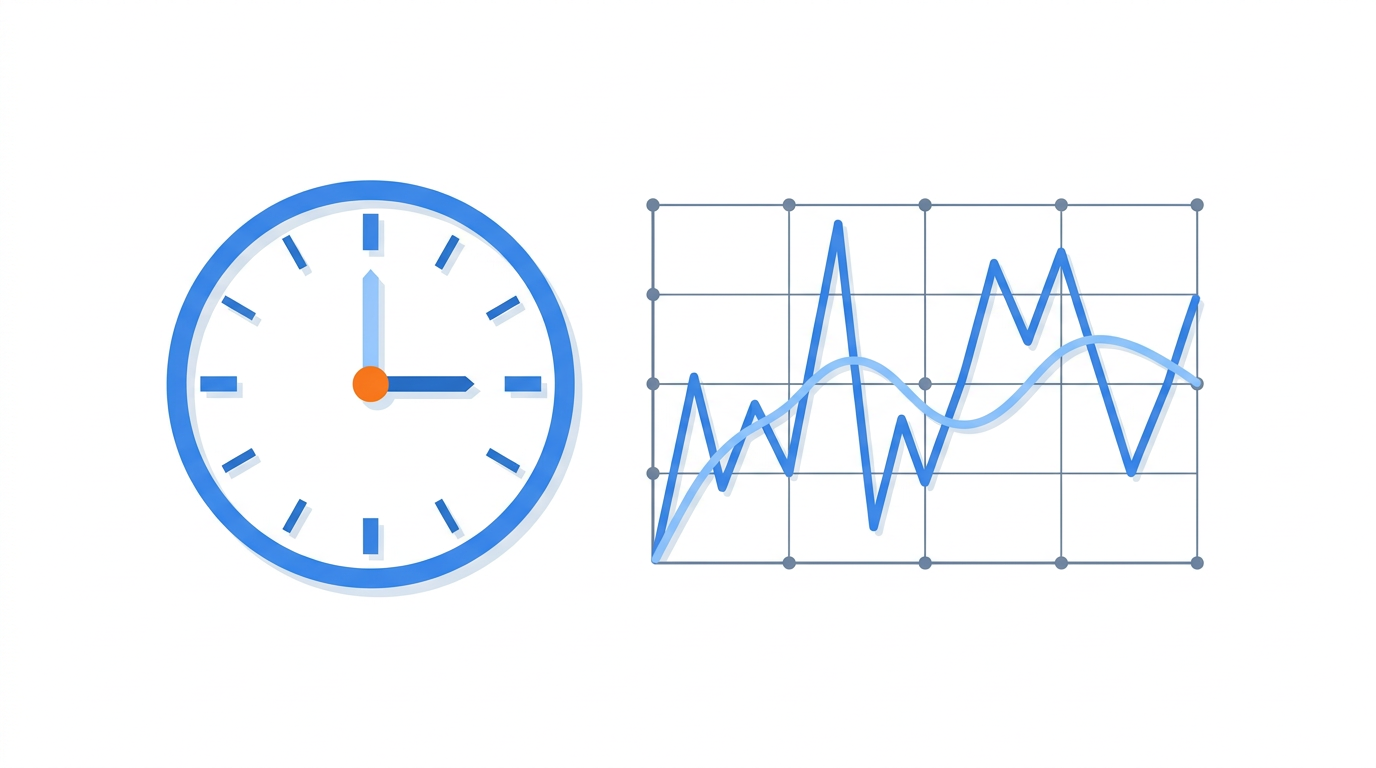
For most marketers, the ritual of checking keyword rankings is a double-edged sword. On one hand, seeing a target term move into the top three positions provides a dopamine hit that validates months of content creation and link building. On the other hand, obsessive daily monitoring can lead to "ranking anxiety," where minor fluctuations—often caused by Google's internal testing or standard SERP volatility—are misinterpreted as catastrophic failures. The question of how often should you check keyword rankings is not merely about frequency; it is about distinguishing between data collection and data analysis.
In the current search landscape, which is increasingly dominated by AI Overviews and highly personalized results, the way we monitor performance has shifted. We are no longer looking for a single static number. Instead, we are looking for trends, patterns, and anomalies. To succeed in 2026, you need a strategy that automates the "noise" and alerts you to the "signal." This requires understanding the difference between how often your tools should scrape data and how often you should actually log in to interpret those numbers.
Effective rank tracking is the foundation of any serious SEO strategy, but doing it wrong can lead to wasted hours and poor decision-making. Whether you are managing an enterprise e-commerce site or a local service business, your cadence must match your business goals, your niche’s volatility, and your technical agility. This guide breaks down the optimal frequencies for different scenarios, the pitfalls of manual checking, and how to build a review ritual that drives growth rather than distraction.
- Collection vs. Review: Data should be collected daily to capture volatility, but formal reviews should typically occur weekly or monthly.
- Manual Checking is Unreliable: Personalization, IP location, and browser history make "searching yourself" an inaccurate way to measure performance.
- Context Matters: High-stakes events like site migrations or core algorithm updates demand real-time or daily monitoring.
- Focus on Trends: Use rolling averages to smooth out daily fluctuations and identify true directional shifts in your SEO health.
- Strategic Alerts: Set thresholds for significant drops (e.g., >5 positions) to avoid unnecessary panic over minor SERP shuffling.
The Fundamental Difference: Collection vs. Review Frequency
One of the most common mistakes in SEO is conflating data collection with data review. In an ideal setup, your SEO rank tracker should be gathering data every single day. Daily collection is essential because it provides the granularity needed to see how a site reacts to a specific update or a new backlink. If you only collect data once a week, you miss the "peaks and valleys" that occur in between, which can lead to a misunderstanding of how volatile a specific keyword actually is.
However, reviewing that data every day is rarely productive for the average business. If you check your rankings every morning, you are reacting to "noise"—the natural, temporary reordering of results that Google performs constantly. A keyword might drop from position 4 to position 8 on Tuesday and be back at position 4 by Thursday. If you spent your Tuesday afternoon rewriting that page in a panic, you wasted resources on a problem that didn't actually exist. The rule of thumb for 2026 is: Collect daily, review weekly, and report monthly.
Why Daily Collection is Non-Negotiable
Daily data collection serves as a "black box" for your website. If a sudden technical error occurs—such as a developer accidentally adding a no-index tag to a critical subfolder—daily tracking will catch the drop immediately. If you were on a weekly schedule, you might not notice the total disappearance of your top pages for six days, by which time the loss in revenue could be significant. Daily data also allows you to calculate 7-day and 30-day rolling averages, which are far more useful metrics than a single point-in-time snapshot.
Why Manual Ranking Checks are Unreliable in 2026
It is tempting to simply type your target keyword into Google to see where you stand. However, this is perhaps the least accurate way to measure SEO success. Google’s results are no longer a "ten blue links" list that looks the same for everyone. Results are now heavily influenced by a variety of factors that a manual search cannot account for, making it a "sample of one" that is often misleading.
First, personalization plays a massive role. If you frequently visit your own website (which most business owners do), Google’s algorithm recognizes this preference and may rank your site higher in your personal search results than it does for a cold prospect. Even using "Incognito" mode does not fully strip away personalization, as Google still uses your IP address, browser fingerprint, and hardware data to tailor results. Furthermore, geographic location is a dominant factor. A search for "personal injury lawyer" in downtown Chicago will yield entirely different results than the same search in a suburb 20 miles away. Without a tool that can spoof specific zip codes, you are only seeing a tiny fraction of your actual search visibility.
Finally, there is the issue of SERP features and AI Overviews. Modern search results include local packs, image carousels, "People Also Ask" boxes, and generative AI summaries. A manual check might tell you that you are "Rank 1," but if an AI Overview and a sponsored shopping block push that Rank 1 result below the fold, your traffic will not reflect a top position. You need a dedicated tool to understand your share of voice in SEO, accounting for all these visual elements.
Cadence by Site Type and Business Goals
Not every website requires the same level of scrutiny. A local bakery does not need the same rank tracking frequency as a global SaaS platform or a high-volume e-commerce site. The frequency should be dictated by the speed at which your market moves and the direct impact of rankings on your daily revenue.
| Site Type | Collection Frequency | Review Frequency | Primary Metric to Watch |
|---|---|---|---|
| Local Service Business | Daily | Bi-Weekly | Local Pack Presence |
| B2B SaaS / Content Site | Daily | Weekly | Commercial Intent Rankings |
| E-commerce (High Volume) | Daily / Hourly | Daily (Trends) | Product Page Visibility |
| News / Publisher | Real-time | Hourly / Daily | Google News / Discover Inclusion |
| New Website (< 6 months) | Daily | Monthly | Indexation and Initial Impressions |
E-commerce and Seasonal Retail
For e-commerce sites, ranking fluctuations are directly tied to the bottom line. During peak seasons—such as Black Friday, Cyber Monday, or industry-specific holidays—the frequency of review should increase. In these windows, daily reviews are justified because competitors are constantly updating prices, running aggressive backlink campaigns, and refreshing content. In a highly competitive niche, being out-ranked for 24 hours during a peak shopping window can result in thousands of dollars in lost sales. During these times, checking your ranking in a competitive niche becomes a high-priority task for the marketing team.
Local SEO and Proximity tracking
Local SEO is notoriously volatile because it relies on the "Proximity, Prominence, and Relevance" triad. If you are a local business, you should be less concerned with your national ranking and more concerned with your performance across a geographic grid. We recommend daily automated collection, but you only need to analyze the grid once every two weeks to see if a competitor is encroaching on your territory or if a new "Google Business Profile" feature is impacting your click-through rate. To learn more about this, see our guide on tracking local rankings by location.
When to Increase Tracking Frequency
While a weekly review is the standard, there are specific "trigger events" that should prompt you to monitor your rankings more closely. In these scenarios, the risk of volatility is high, and early detection is key to mitigation.
1. During and After a Site Migration
Whether you are changing domains, switching CMS platforms, or moving from HTTP to HTTPS, a migration is a high-risk SEO event. During a migration, you should monitor your top-performing keywords daily (or even multiple times a day) for the first two weeks. You are looking for signs that your redirects are working correctly and that Google is transferring authority to the new URLs. Any significant drop during this period suggests a technical failure that needs immediate attention.
2. Following a Google Core Update
Google releases several major core updates each year. When an update is announced (or when the SEO community starts reporting massive shifts), you should check your rankings daily. However, do not react immediately. Core updates often involve a "shake-up" period that lasts 14–21 days. Rankings may drop significantly on day three, only to recover by day ten. Monitor the data daily to understand the scope of the impact, but wait until the update has finished rolling out before making structural changes to your site.
3. Content Launches and Relaunches
When you publish a high-value piece of content or perform a significant refresh of an old article, you should track those specific keywords daily to see how Google is "testing" your content. This helps you understand the timeline for SEO results in your specific niche. If a new page hasn't entered the top 100 within a few weeks, it may indicate an indexation issue or a lack of topical authority.
Reading Signal vs. Noise: The Power of Rolling Averages
The greatest danger of frequent rank tracking is the "micro-management" of data. If you look at a single day’s data, you are seeing a snapshot that includes search engine testing, server latency, and localized variations. To get a true sense of your performance, you must use rolling averages.
"A one-day drop of five positions is an anecdote. A seven-day downward trend in average position is a diagnostic signal. The goal of rank tracking is not to see where you are today, but to see where your strategy is taking you over time."
Most professional SEO tools allow you to overlay a 7-day or 30-day moving average on your ranking charts. This smooths out the daily spikes and dips. If your daily rank is bouncing between 3 and 7, but your 30-day average is steadily climbing from 6.2 to 5.1, your SEO strategy is working. Conversely, if your daily rank looks stable but your 7-day average is slowly ticking downward, you may be facing "content decay" or an increasing competitor presence that requires a fresh SEO audit.
Setting Alert Thresholds
Instead of manually checking rankings to see if something is wrong, set up automated alerts. This allows you to focus on your work while the software monitors the SERPs. Effective alert thresholds might include:
- Critical Drop: Any keyword in the Top 3 drops more than 5 positions in 24 hours.
- Top 10 Exit: A primary target keyword falls off the first page of results.
- New Competitor: A new domain enters the Top 10 for more than 20% of your tracked keywords.
- Feature Loss: Your site loses a "Featured Snippet" for a high-volume term.
The Practical Review Ritual: A Weekly Checklist
To keep your SEO efforts disciplined and data-driven, establish a weekly review ritual. This prevents the time-wasting habit of checking rankings multiple times a day while ensuring you stay on top of your performance goals. Spend 30 to 60 minutes once a week (Tuesday or Wednesday is usually best to avoid weekend anomalies) going through the following steps.
- Review the "Big Movers": Look at keywords that have gained or lost more than 10 positions. Is there a pattern? Are they all in the same subfolder?
- Check Share of Voice: Instead of individual keywords, look at your overall visibility. Is your brand becoming more or less prominent in your niche?
- Analyze SERP Intent Shifts: Check if the type of results for your keywords has changed. Is Google now showing more videos or AI Overviews? You may need to update your content to match the new search intent.
- Compare Desktop vs. Mobile: Rankings can diverge significantly between devices. Ensure a gain on desktop isn't being masked by a loss on mobile. For more on this, see why desktop and mobile rankings differ.
- Evaluate Competitor Gains: Who took the spots you lost? Look at their content to see if they’ve added something you’re missing, such as better data, more images, or clearer answers to common questions.
Rank Tracking vs. Google Search Console
It is important to remember that rank tracking tools and Google Search Console (GSC) provide different types of data. You should check both, but for different reasons. GSC provides "retrospective" data—it shows you the average position of where your site actually appeared when users searched. However, GSC data is often delayed by 48–72 hours and aggregates data over a period of time, which can hide current volatility.
A dedicated rank tracking tool provides "proactive" data. It checks the SERPs at a specific moment in time from a specific location, regardless of whether a user clicked or not. This is vital for competitive analysis. While GSC tells you how you performed in the past, a rank tracker tells you where you stand right now. Integrating both into your workflow gives you the most complete picture of your SEO health.
| Feature | Google Search Console | Third-Party Rank Tracker |
|---|---|---|
| Data Latency | 2-3 Days | Real-time / Daily |
| Geography | Country-level (Mostly) | Zip code / City level |
| SERP Features | Limited visibility | Tracks Snippets, Local Packs, AI |
| Keyword Discovery | Excellent (Shows all queries) | Limited to what you track |
| Competitor Data | None | Full competitor tracking |
Common Pitfalls in Ranking Frequency
As you refine your tracking schedule, avoid these common traps that can derail your strategy and lead to burnout.
Reacting to "Ghost" Drops
Google often runs A/B tests on the SERPs. You might see your site drop to page 2 for four hours while Google tests a new layout or a different set of results. If you check your rankings during that specific four-hour window, you will see a drop. If you check it again the next morning, you are back at #1. This is why daily checking without context is dangerous. Always wait for the "dust to settle" before assuming a drop is permanent.
Ignoring the "Long Tail"
Many marketers only track their 5–10 "trophy" keywords. While these are important, they are often the most volatile. By ignoring the hundreds of long-tail keywords that drive the bulk of your traffic, you might miss a broader trend. If your trophy keywords are down but your long-tail visibility is up, your site’s overall authority is likely growing. Use keyword research tools to broaden your tracking list so you can see the forest, not just the trees.
Over-Checking After a Change
After you optimize a page or build a new set of links, the temptation to check rankings every hour is high. SEO, however, does not work in real-time. It can take days or weeks for Google to recrawl a page and even longer for the algorithm to re-evaluate its position in the context of the broader web. Over-checking leads to frustration. Instead, focus on your technical SEO checklist to ensure there are no barriers to indexing, and then give the algorithm time to work.
Conclusion: Finding Your Balance
In the final analysis, the answer to "how often should you check keyword rankings" is: as often as is required to make informed decisions, and no more. For most professionals, this means daily automated data collection to ensure no data is lost, combined with a deep-dive weekly review to identify trends and a monthly report to measure progress against high-level business goals.
SEO is a marathon, not a sprint. Watching the rankings every hour is like watching a marathon runner’s heart rate every second—it provides data, but it doesn’t tell you who is going to win the race. By shifting your focus from daily fluctuations to long-term trends and utilizing tools that provide localized, accurate data, you can move away from "ranking anxiety" and toward a strategic, growth-oriented approach. If you are ready to automate your data collection and get a clearer view of your search performance, you can set up daily rank tracking today and start focusing on the actions that actually move the needle.
Frequently asked questions
Is it bad to check my rankings every day?
It is not "bad" for your site, but it can be bad for your productivity. Daily fluctuations are normal in SEO. If checking daily causes you to make impulsive changes to your content or strategy, it is better to switch to a weekly review. However, using an automated tool to collect data daily is highly recommended for identifying trends.
Why do my rankings look different on my phone vs. my computer?
Google uses different algorithms for desktop and mobile search. Mobile results prioritize factors like page speed, mobile-friendliness, and physical proximity to the user. Additionally, the layout of SERP features (like image blocks) differs between devices, which can shift organic results up or down. You should track both separately to get an accurate view.
How long should I wait after a drop before taking action?
Unless the drop is caused by a clear technical error (like a 404 error or a no-index tag), you should generally wait 3 to 7 days before making major changes. Rankings often bounce back after temporary volatility or a Google "shuffle." If the drop persists for more than a week, it’s time to investigate deeper causes like content decay or competitor updates.
Can I use free tools to track my rankings daily?
While some free tools exist, they are often limited in terms of the number of keywords you can track, the geographic accuracy, and the frequency of updates. Most free tools also do not save historical data, making it impossible to see the rolling averages that are essential for professional SEO analysis. For serious business growth, a dedicated tracker is a worthwhile investment.
Does rank tracking affect my actual SEO?
No, the act of tracking your rankings does not influence where you rank. Rank tracking tools use automated bots to "read" the search results page just like a user would. As long as you are using a reputable tool that follows standard scraping protocols, it will have zero impact on your site's standing with Google.